Metabolic Adaptation: Why Diet and Exercise Stop Working After 35

If you’re in your late 30s, 40s, or early 50s and feel like your body has stopped responding to diet and exercise, you’re not imagining it.
The calorie deficit that once worked now barely moves the scale. Strength training helps, but fat loss stalls. Energy drops. Recovery slows. Libido changes. Sleep feels lighter.
Before you search for a medical weight loss clinic near me or a TRT clinic online, there’s one principle you need to understand:
Metabolic adaptation.
At OmniRx Health, we start with a simple rule: Don’t guess, test. Establish your baseline first.
Before treatment, we evaluate biomarkers, hormones, and metabolic health with a licensed provider at omnirxhealth.com. Because what feels like “lack of discipline” is often biology shifting under the surface.
What Is Metabolic Adaptation?
Metabolic adaptation refers to the body’s ability to reduce energy expenditure in response to prolonged calorie restriction, stress, or hormonal changes.
In simple terms, when you eat less and move more, your body learns to burn fewer calories.
Research shows that after weight loss, resting metabolic rate can decrease beyond what’s expected from body size alone. This effect has been documented in studies following participants for years after dieting, including long-term follow-ups of weight-loss interventions.
After 35, this becomes more pronounced due to:
- Gradual loss of lean muscle mass (sarcopenia)
- Declining testosterone in men
- Shifts in estrogen and progesterone in women
- Increased insulin resistance
- Chronic stress and poor sleep
You’re not broken. Your physiology has changed.
Why It Hits Harder After 35
1. Muscle Loss Reduces Basal Metabolic Rate
Muscle tissue burns more calories at rest than fat. Starting in your 30s, muscle mass declines approximately 3–8% per decade without resistance training.
If you’re dieting aggressively without protecting muscle, you’re accelerating the problem.
This is why patients often ask:
- How to maintain muscle on Ozempic?
- Protein intake while on semaglutide?
- GLP-1 weight loss plateau solutions?
Without muscle preservation, your metabolic engine slows.
2. Hormonal Shifts in Men
Many men in their 30s and 40s begin experiencing:
- Low testosterone symptoms in men in their 30s
- Reduced libido
- Fatigue
- Increased abdominal fat
- Brain fog
Testosterone naturally declines about 1% per year after age 30. When levels drop below optimal ranges, body composition shifts toward fat storage.
This is when searches like:
- Online TRT prescription
- Testosterone replacement therapy cost
- Natural testosterone boosters vs TRT
Start appearing.
But before pursuing testosterone cypionate dosage or comparing TRT injection vs cream, you need lab work. Proper TRT blood work requirements include total testosterone, free testosterone, SHBG, estradiol, hematocrit levels, TRT monitoring, and more.
3. Hormonal Shifts in Women
For women 30–60, metabolic adaptation often overlaps with:
- Perimenopause
- Estrogen fluctuations
- Insulin resistance
- Increased visceral fat
This is when many women explore:
- Buy semaglutide online
- Tirzepatide vs semaglutide efficacy
- Zepbound vs Wegovy
- GLP-1 weight loss plateau
GLP-1 receptor agonists work by slowing gastric emptying, increasing satiety, and improving insulin sensitivity. This is the GLP-1 mechanism of action.
But again, this isn’t guesswork. Biomarkers matter.
Why Diet Alone Stops Working
When calories drop too low:
- Thyroid output may decrease
- NEAT (non-exercise activity thermogenesis) declines
- Hunger hormones increase
- Cortisol rises
Your body becomes more efficient at conserving energy.
This explains why many high performers, especially in cities like Los Angeles, Miami, Austin, NYC, or Scottsdale, train harder, eat cleaner, track macros, wear Oura or Whoop, and still see diminishing returns.
It’s not about discipline. It’s an adaptation.
Where GLP-1s Fit In
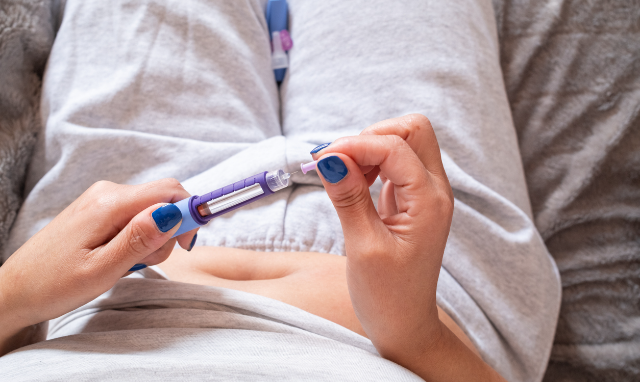
For patients with insulin resistance or significant weight-loss resistance, GLP-1 medications such as semaglutide or tirzepatide may help reset appetite signaling.
Common research questions include:
- Wegovy dosing schedule
- Tirzepatide cost without insurance
- Does insurance cover Wegovy?
- Compounded semaglutide safety
- Switching from Ozempic to Mounjaro
GLP-1s can improve metabolic flexibility, but they require:
- Adequate protein intake
- Resistance training
- Monitoring for side effects
Patients often need support with:
- Semaglutide nausea remedies
- Mounjaro side effects management
- Alcohol and GLP-1 medications
- Stopping semaglutide weight regain
These medications are tools, not cures. Long-term metabolic health depends on preserving lean mass and correcting underlying hormonal drivers.
Where TRT Fits In
For men with confirmed hypogonadism, testosterone replacement therapy can support:
- Lean mass retention
- Improved libido
- Energy
- Mood
- Body composition
However, it must be medically supervised. Topics often discussed include:
- Estrogen blockers for men
- Anastrozole dosage for men
- Symptoms of high estrogen in men
- TRT and fertility
- HCG vs gonadorelin
- Enclomiphene citrate benefits
There are also considerations around:
- Testosterone and heart health
- Hematocrit levels and TRT monitoring
- TRT side effects: hair loss
- Sleep apnea and low testosterone
A responsible TRT clinic online should never skip baseline labs.
The Hidden Variable: Your Biomarkers
This is the piece most people skip.
You can’t optimize what you haven’t measured.
At OmniRx Health, before discussing:
- Buy semaglutide online
- Online TRT prescription
- Bioidentical hormone replacement therapy for men
- Medical weight loss clinic online
We establish:
- Fasting insulin
- A1C
- Lipid profile
- Inflammatory markers
- Thyroid panel
- Total and free testosterone
- Estradiol
- SHBG
- Hematocrit
Because metabolic adaptation is rarely about willpower. It’s about signals.
And signals live in your bloodwork.
Can You Reverse Metabolic Adaptation?
You can improve metabolic flexibility, but it requires a structured approach:
- Restore hormonal balance if clinically low
- Preserve or increase lean muscle
- Improve insulin sensitivity
- Support sleep and recovery
- Avoid aggressive crash dieting
Studies show resistance training combined with adequate protein (often 0.7–1 gram per pound of lean mass, individualized) helps preserve resting metabolic rate during weight loss.
For some patients, GLP-1 therapy combined with resistance training improves body composition more effectively than dieting alone.
For others, correcting low testosterone symptoms in men in their 30s may be foundational.
There is no one-size-fits-all protocol.
If You’re Plateaued, Start Here
If you’re experiencing:
- Persistent fat gain despite training
- Low libido
- Low energy
- Slower recovery
- GLP-1 weight loss plateau
- Difficulty maintaining muscle
The next step isn’t another diet.
It’s data.

Don’t Guess, Test: Establish Your Baseline First
Metabolic adaptation after 35 is real. But it’s measurable. Before choosing semaglutide, tirzepatide, TRT, peptides, or any other intervention, you need clarity.
At OmniRx Health, we connect you with licensed providers nationwide for comprehensive biomarker testing and personalized treatment planning from California to Florida, Texas to New York, and Arizona.
Whether you’re exploring GLP-1 therapy, researching testosterone replacement therapy cost, or simply trying to understand why your body feels different from it did at 28, the first step is the same:
Don’t guess, test. Establish your baseline first.
Book your consultation at omnirxhealth.com and start with the data that drives real optimization.