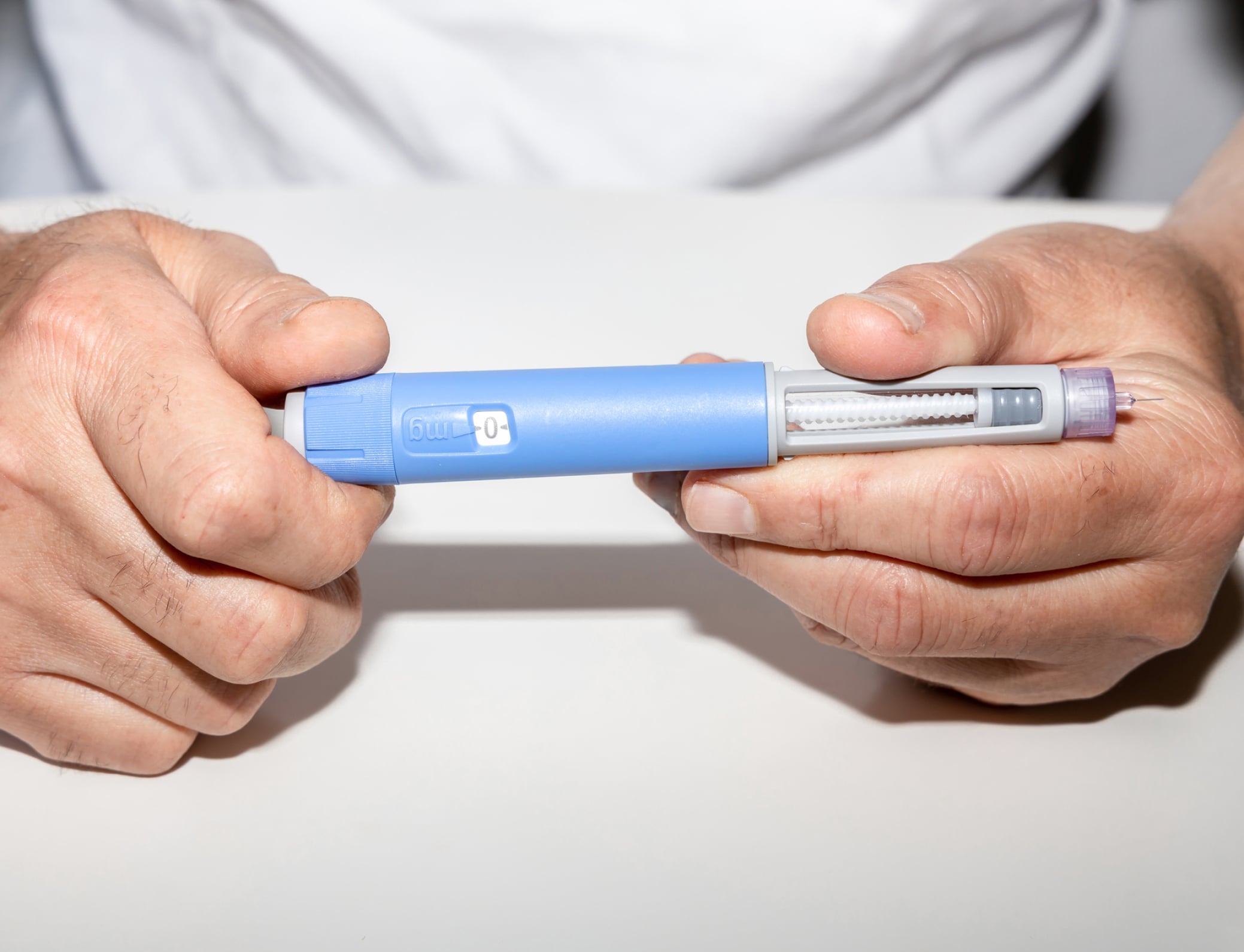
Peptides have moved from research labs into mainstream longevity conversations. If you listen to Peter Attia or Andrew Huberman, you’ve likely heard about growth hormone secretagogues, BPC-157, or peptide stacks for fat loss. But what is peptide therapy in a clinical setting, and how does it actually work?
At OmniRx Health, peptide therapy is not about trends. It’s about targeted, physician-guided protocols designed to support recovery, metabolic health, hormone balance, and performance. This guide breaks down the biology, safety, and lab monitoring behind peptide therapy and who it may be appropriate for.
What Is Peptide Therapy?
Peptides are short chains of amino acids that act as signaling molecules in the body. They tell cells what to do. Some stimulate growth hormone release. Others influence inflammation, tissue repair, or metabolic regulation.
Peptide therapy refers to the medical use of specific peptides to support biological functions that may decline with age, stress, or metabolic dysfunction. Unlike hormones themselves, many peptides act upstream. For example, growth hormone secretagogues stimulate your body to release its own growth hormone rather than replacing it directly.
Common prescription peptides used in clinical practice include:
- BPC-157 for injury recovery and gut health peptides applications
- CJC-1295 and Ipamorelin, as growth hormone secretagogues, are explained in anti-aging protocols
- Sermorelin for stimulating endogenous growth hormone
- AOD-9604 for weight loss support
- TB-500 for tissue repair
The goal is not to override physiology but to optimize signaling pathways that may be underperforming.
How Peptides Work In The Body
To understand peptide therapy, it helps to understand cell signaling.
Every cell has receptors. When a peptide binds to a receptor, it triggers a cascade of biological responses. For example:
- CJC-1295 vs Ipamorelin both stimulate growth hormone release, but through slightly different mechanisms. CJC-1295 extends growth hormone-releasing hormone activity, while Ipamorelin mimics ghrelin to increase pulsatile growth hormone secretion.
- BPC-157 interacts with growth factors and may support angiogenesis and tendon repair in preclinical models.
- Sermorelin benefits stem from its ability to stimulate pituitary growth hormone production, which can influence IGF-1 levels.
Growth hormone influences body composition, muscle repair, sleep quality, and fat metabolism. According to clinical literature, growth hormone secretion naturally declines with age, which may contribute to reduced lean mass and slower recovery.
Peptides do not “cure” aging. They support specific biological pathways that decline over time.
Who Is Peptide Therapy For?
Peptide therapy is typically considered for adults who:
- Struggle with slow injury recovery or chronic joint pain
- Experience brain fog, fatigue, or poor sleep
- Notice reduced muscle mass despite consistent training
- Have lab markers indicating suboptimal IGF-1 or growth hormone function
- Want peptide therapy for anti-aging within a supervised medical framework
Men Ages 35–55
Men often seek peptides to complement TRT protocols or to improve recovery and body composition. A low libido blood test may reveal suboptimal testosterone, high SHBG, and free testosterone imbalance, or elevated estradiol levels in men. In these cases, peptide therapy may be part of a broader plan that includes monitoring TRT blood work and an IGF-1 blood test, meaning evaluation.
Women Ages 30–60
Women commonly explore peptides to improve skin elasticity, support fat loss, and optimize metabolism. When diet and exercise plateau, biomarkers such as insulin resistance, blood test results, or hs-CRP levels may guide interventions.
The Benefits Of BPC-157 And Other Injury Peptides
The benefits of BPC-157 are often discussed in the context of injury recovery. Preclinical studies suggest it may influence angiogenesis and tendon-to-bone healing. While human research remains limited, clinical practice has explored its use for:
- Peptides for joint pain
- Post-surgical recovery support
- Gut health peptides for digestive repair
Similarly, comparisons of TB-500 and BPC-157 often focus on their mechanisms of action. TB-500 is associated with actin regulation and cell migration, while BPC-157 may influence vascular and growth factor pathways.
For athletes and active professionals in cities like Los Angeles, Austin, or Miami, these protocols are often integrated into structured recovery plans.
Peptide Stacking: Synergy Without Guesswork
A peptide stack for fat loss may combine AOD-9604, a growth hormone secretagogue, with Ipamorelin. For injury repair, clinicians may pair BPC-157 with TB-500.
Stacking is not random. It is based on:
- Baseline lab data
- Training intensity
- Sleep metrics from wearables
- Body composition goals
The best peptides for injury recovery are chosen based on tissue type, inflammation markers, and recovery timelines. Peptide cycle length is typically defined in advance, with clear monitoring checkpoints.
Are Peptides Safe?
Are peptides safe? Safety depends on:
- Physician supervision
- Appropriate dosing
- Proper reconstitution and injection technique
- Monitoring biomarkers
When prescribed by a licensed medical professional through legitimate peptide sources, peptides are compounded in accordance with regulatory standards.
At OmniRx Health, patients receive:
- Structured dosing guidance, including Ipamorelin dosage for sleep optimization
- Education on how to inject peptides subcutaneously
- Clear safety protocols
Common BPC-157 side effects are typically mild but can include injection site irritation. Any therapy requires ongoing evaluation.

Safety And Protocol Primer: Mixing And Injecting Peptides
Many patients are concerned about how to mix peptides and administer them safely.
In clinical settings, peptides are provided in lyophilized form and reconstituted with bacteriostatic water. Dosage is measured using insulin syringes for subcutaneous injection.
Key safety principles include:
- Sterile technique
- Proper refrigeration
- Rotating injection sites
- Adhering to the prescribed peptide cycle length
Education reduces anxiety and improves adherence.
Decode Your Data: Biomarkers That Matter
Peptide therapy should never exist in isolation from lab work.
Before starting treatment, patients often complete:
- Male hormone panel blood test
- Comprehensive metabolic panel explained for liver and kidney function
- Thyroid panel T3 vs T4
- IGF-1 blood test meaning analysis
- Vitamin D and testosterone link assessment
- Lipids panel optimization review
Optimal vs normal testosterone levels differ from standard lab reference ranges. “Normal” may span wide intervals. Optimization focuses on symptom resolution and functional health.
For men over 40, baseline health checkup men over 40 screenings often include:
- Prostate-specific antigen (PSA) range
- Homocysteine and heart health markers
- Ferritin levels and energy
- hs-CRP inflammation marker
Women may assess insulin resistance, blood test markers, and thyroid function when addressing weight plateaus.
Patients searching for how to get blood work done without doctor oversight often find that telehealth platforms provide structured ordering and interpretation, eliminating confusion.
Symptom-To-Solution Mapping
Brain fog? Consider thyroid function, cortisol rhythm, and IGF-1 levels.
Fatigue? Review ferritin levels and energy markers, high cortisol symptoms men may overlook, and adrenal stress patterns.
Low libido? Evaluate estradiol levels in men, SHBG and free testosterone, and growth hormone status. Peptides are selected after the data review. Cognitive enhancement peptides, for example, may be considered alongside sleep metrics and metabolic health rather than in isolation.
What Does Peptide Therapy Cost?
Peptide therapy cost varies based on:
- Type of peptide
- Length of protocol
- Lab testing frequency
- Whether stacking is involved
While buying peptides online in the USA may offer low-cost options, quality control and safety oversight matter. Prescription pathways ensure product integrity and appropriate follow-up.
Preventative Optimization For High Performers
In high-income markets like San Diego, Scottsdale, and New York City, preventative health screenings for men and women are increasingly proactive.
Peptide therapy is often integrated with:
- At-home testosterone test follow-up
- Ongoing monitoring of Tof RT blood work
- Metabolic tracking
- Wearable data integration
The goal is not quick fixes. It is sustained performance, recovery, and metabolic resilience.
Is Peptide Therapy Right For You?
Peptide therapy is best suited for adults who:
- Have objective lab markers supporting intervention
- Are committed to structured follow-up
- Value medical supervision
- Seek optimization rather than shortcuts
It is not appropriate for individuals looking for unsupervised experimentation or miracle outcomes.

Take The Next Step With Clinical Oversight
If you are experiencing fatigue, slow recovery, weight resistance, or hormonal symptoms, a data-driven approach matters.
At OmniRx Health, licensed providers evaluate your labs, symptoms, and goals before designing a personalized protocol. Whether you are exploring peptides for muscle growth, peptide therapy for anti-aging, or injury recovery support, treatment begins with clarity and monitoring.
Start with a comprehensive lab review and physician consultation at omnirxhealth.com.
Your biology deserves precision, not guesswork.